

Shed Anchors: How to Tie Down Your Shed for Maximum Stability
Shed anchors secure your building to the ground so high winds can’t shift, lift, or tip it over. Most portable sheds use auger-style earth anchors with straps or cables at each corner, while sheds on a concrete slab use concrete anchors. In storm-prone areas like the Southeast, anchoring is one of the simplest ways to protect your shed and everything inside it.
This guide covers the main types of anchors, how to anchor a shed to the ground step by step, and when it makes sense to let a professional handle it.
What should you know about shed anchors?
TL;DR:
-
Shed anchors keep wind from lifting, sliding, or tipping your building.
-
Earth anchors (also called auger anchors) are the most common choice for sheds on soil, grass, or gravel.
-
Sheds on a concrete slab use concrete wedge or expansion anchors.
-
Plan for at least one anchor at each corner, plus more along the long sides of larger buildings.
-
Earth anchors typically go 2 to 3 feet deep and are spaced about 4 to 8 feet apart.
-
Steel-framed buildings can be rated for winds up to 160 MPH when properly anchored.
Do you need to anchor your shed?
In most cases, yes. A shed acts like a large box that wind can push against and lift from underneath, and even a heavy building can shift in a strong storm.
Anchoring is especially important if you:
-
Live in an area with hurricanes, tropical storms, or severe thunderstorms
-
Have a building in an open yard with little wind protection
-
Store valuable equipment like mowers, ATVs, or tools
-
Have local codes or HOA rules that require tie-downs
For Southeast homeowners, anchoring is a key part of storm prep. Our post on Cat 5 hurricane sheds for Georgia homeowners explains why wind ratings matter, and the secrets behind long-lasting metal storage buildings covers how steel holds up to severe weather.
What types of anchors for a shed are there?
The right anchor depends mostly on what your shed sits on. Here’s how the main options compare:
| Anchor type | How it works | Best for |
|---|---|---|
| Earth (auger) anchors | A steel rod with a spiral end that screws deep into the ground | Soil, grass, dirt, and gravel |
| Ground screws | Large screw-style anchors driven into the soil | Firm soil, some rocky ground |
| Concrete anchors | Wedge or expansion bolts set into drilled holes | Concrete slabs and footings |
| Tie-down kits | Straps or cables that connect anchors to the building | Used with any anchor type |
What are earth anchors for a shed?
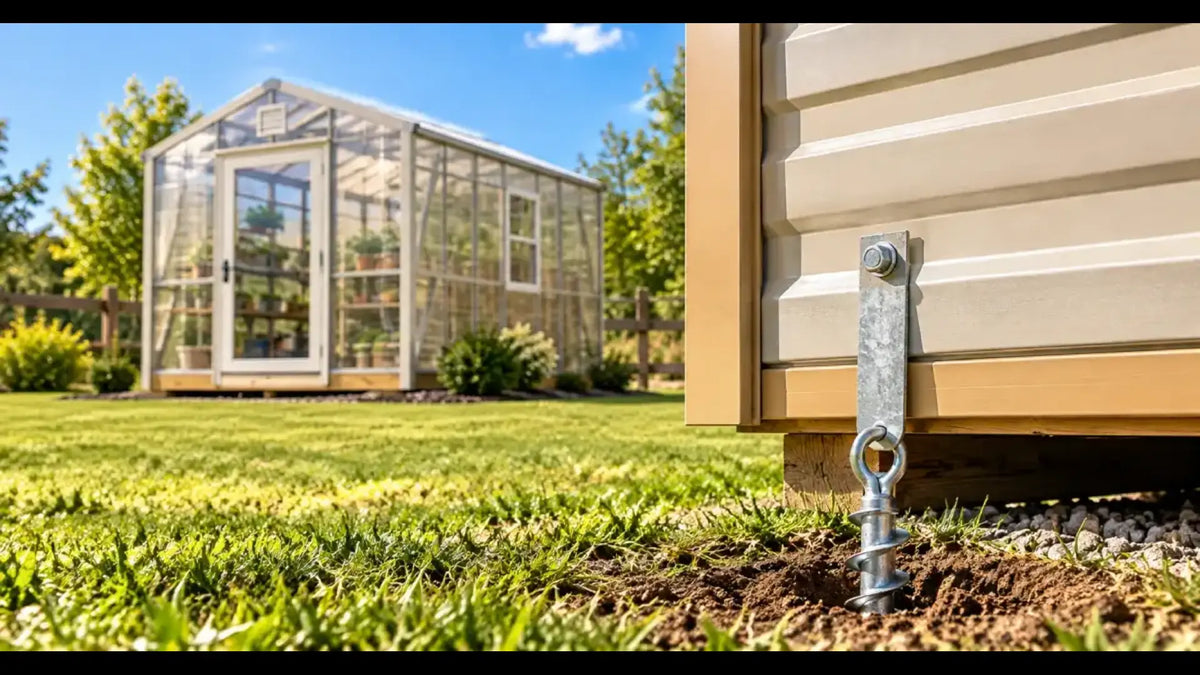
Earth anchors for a shed are the most common choice for portable buildings. They’re steel rods with a helix, or spiral plate, at the bottom that screws into the soil and resists being pulled out. A strap or cable runs from the anchor’s eye to the building’s base rail.
Look for galvanized anchors and straps, which resist rust in damp soil.
How do you anchor a shed to the ground?
Anchoring a shed is a manageable project with the right tools. Here’s what you’ll need and how to do it.
What do you need to anchor a shed?
-
Auger-style earth anchors (one per corner, plus extras for long sides)
-
Galvanized straps, cables, or a shed tie-down kit
-
A steel bar or pipe to turn the anchors into the ground
-
A drill and the right fasteners or brackets for your building’s base
-
A tape measure and level
-
Work gloves
What are the steps to anchor a shed?
-
Call 811 before you dig. This free service marks buried utility lines so you don’t hit gas, water, or electric lines.
-
Check local rules. Some cities and counties set requirements for anchor type, number, or spacing.
-
Mark anchor locations. Place one anchor at each corner, plus additional anchors about every 4 to 8 feet along longer sides.
-
Set the anchors. Push each anchor into the ground and turn it with a bar through the eye until it’s 2 to 3 feet deep, with the eye just above the surface.
-
Attach the straps or cables. Connect each anchor to the building’s base rail or frame using brackets or pre-drilled holes.
-
Tighten everything. Remove all slack so the building can’t shift, without pulling it out of level.
-
Test each anchor. Pull firmly on each strap. Anchors shouldn’t move under pressure.
-
Recheck the level. Make sure the building still sits level and the doors open and close smoothly.
How do you anchor a shed without concrete?
Most portable sheds sit on foundation blocks, gravel, grass, or dirt, so anchoring without concrete is the most common setup. Earth anchors work well here because they grip the soil itself rather than relying on a slab.
The process is the same as the steps above. The key is getting each anchor deep enough to reach firm soil and keeping the straps tight. If you’re still choosing a foundation, our guide to the best foundation for a shed compares gravel, concrete, and block options, and our guide on how to level ground for a shed covers site prep.
How do you anchor a shed to concrete?
If your shed sits on a concrete slab, use concrete wedge anchors or expansion anchors. Drill holes into the slab with a masonry bit, insert the anchors, and secure the building’s base or tie-down brackets to them.
Place anchors at each corner and along the long sides, just as you would with earth anchors. Make sure the slab is thick and in good condition, since cracked or thin concrete won’t hold an anchor well.
How many shed anchors do you need?
Most sheds need at least four anchors, one at each corner. Larger buildings need more along the long sides, typically spaced about 4 to 8 feet apart.
For example, a small 8x10 shed may only need four corner anchors, while a 12x24 building will usually need extra anchors along each 24-foot side. Local codes may also set minimums, so check before you start.
How does soil type affect shed anchors?
Soil makes a big difference in how well an anchor holds:
-
Clay soil, common across much of Georgia and Alabama, holds anchors well once they’re set but can be hard to turn into.
-
Sandy soil, common in coastal areas, may need longer or larger anchors to hold firmly.
-
Rocky soil can stop an auger anchor short, so ground screws or relocating the anchor slightly may help.
-
Wet or soft soil holds poorly. Fix drainage first so anchors grip firm ground.
If an anchor won’t hold under a firm pull, it isn’t deep enough or the soil isn’t right for that anchor type.
Should you anchor your shed yourself or hire a pro?
Anchoring a small shed is a reasonable DIY project if you have the tools and good soil, and it usually takes an afternoon. A professional installation is worth considering for larger buildings, rocky or sandy soil, or areas with strict codes.
Action Buildings can anchor your building during delivery, the same day it’s set and leveled, so there’s no second visit or separate project. If you’d like your building anchored, ask your sales rep about anchoring options when you order. You can see how delivery day works on our process page.
What does anchoring look like in a real yard?
Say a homeowner near the Georgia coast is getting ready for hurricane season. Their steel shed sits on a gravel pad in an open backyard, and the soil is sandy.
They have the shed anchored with earth anchors at each corner and along the long sides, using anchors sized for sandy soil. Before each storm, they clear loose debris from the yard, check that the straps are tight, and make sure the doors latch securely. Our buyer’s guide to storage sheds in Savannah, GA covers more coastal considerations.
How do you keep shed tie downs secure over time?
Anchors aren’t a one-time job. Soil shifts, straps can loosen, and storms test every connection. Check your shed tie downs:
-
Once a season, as part of routine maintenance
-
Before storm season, especially in hurricane-prone areas
-
After any major storm, looking for loose straps or shifted anchors
Tighten any slack, replace damaged straps, and reset anchors that have pulled loose. Our guide to shed maintenance do’s and don’ts includes anchors in its seasonal checklist.
Frequently Asked Questions About Shed Anchors
For more quick answers, visit our FAQ page.
Are your buildings weather resistant?
Yes. Our steel-framed buildings are rated for winds up to 160 MPH when properly anchored with tie-downs. Our post comparing steel sheds with wood and plastic explains why steel holds up better in storms.
How deep should shed anchors go?
Earth anchors typically go 2 to 3 feet deep, depending on your soil. The anchor’s eye should sit just above the ground so straps can attach.
Can you anchor a shed that sits on blocks?
Yes. Earth anchors go into the ground around the building and attach to the base rail, so they work with foundation blocks, gravel, or grass.
Can shed anchors be removed if I move my shed?
Yes. Earth anchors can usually be unscrewed and removed, which makes them a good fit for portable buildings that may be relocated later.
Do I need a permit to anchor a shed?
Requirements vary. Some areas require tie-downs for sheds or set anchoring standards, so check with your city or county before you start.
Final answer: how do you anchor a shed to the ground?
Use earth anchors for sheds on soil, gravel, grass, or blocks, and concrete anchors for sheds on a slab. Place at least one anchor at each corner, add more along the long sides, set earth anchors 2 to 3 feet deep, and connect them to the base with tight straps or cables. Call 811 before digging, check local rules, and recheck your anchors each season and after storms.
Properly anchored, a steel-framed building can be rated for winds up to 160 MPH, which gives you real peace of mind when storm season arrives.
Want your building anchored the day it’s delivered? Connect with our team to ask about anchoring options for your area.
Share:
How to Winterize a Shed for Cold Weather in Birmingham, AL
What Is a Galvanized Steel Shed? Rust, Upkeep, and Lifespan