

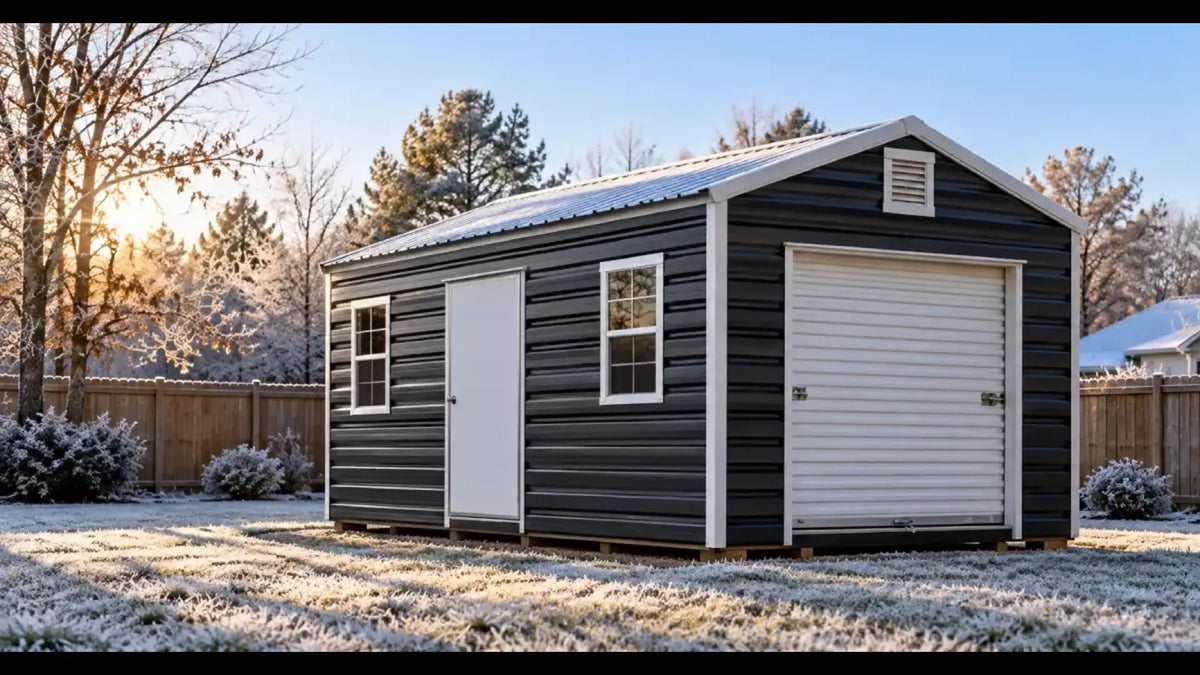
How to Winterize a Shed for Cold Weather in Birmingham, AL
To winterize a shed, clean it out, seal gaps around doors and windows, control moisture, move anything that can freeze, prep stored equipment, and check the roof, doors, and anchors before the first freeze. In Birmingham, that usually means getting ready by early November. A winterized shed stays drier, protects what’s inside, and is ready for the cold snaps central Alabama sees each year.
This guide explains what Birmingham winters mean for your shed, walks through a winterizing checklist, and covers how to keep a shed warm and heat it safely.
What should you know about winterizing a shed in Birmingham?
TL;DR:
-
Birmingham winters are mild overall but bring regular hard freezes, usually between early November and late March.
-
Moisture and condensation are bigger winter threats to a steel shed than the cold itself.
-
Move paint, water-based products, and other liquids that can freeze.
-
Prep mowers and outdoor power equipment before storing them for the season.
-
Insulation and weatherstripping help keep a shed warmer without any heat source.
-
If you heat a shed, use an electric heater with safety shutoffs. Never run a fuel-burning heater or generator in a closed shed.
How cold does it get in Birmingham in winter?
Birmingham doesn’t get long, snowy winters, but it does freeze. According to the National Weather Service, the average first freeze arrives around November 9, and the average last freeze is around March 25. The number of freezing days varies a lot from year to year, from as few as 20 to as many as 81 in a single winter on record.
Snow is rare, averaging about 1.5 inches a year, but ice storms and cold snaps can arrive with little warning. That mix of mild days and sudden freezes is what makes winter prep worth doing.
What winter problems affect a shed in central Alabama?
In a climate like Birmingham’s, a winter shed faces a few specific risks:
-
Condensation. When warm daytime air cools overnight, moisture can collect on the inside of metal panels and drip onto stored items.
-
Frozen liquids. Paint, some cleaners, and water-based products can be ruined by a single hard freeze.
-
Freeze-thaw cycles. Water that freezes and thaws repeatedly can soften the ground around the base and affect drainage.
-
Winter storms. Ice, wind, and falling branches can damage roofs and doors.
-
Pests seeking shelter. Mice and other critters look for warm, dry places as temperatures drop.
How do you winterize a shed?
Here’s a step-by-step checklist to winter proof your shed before the first freeze:
-
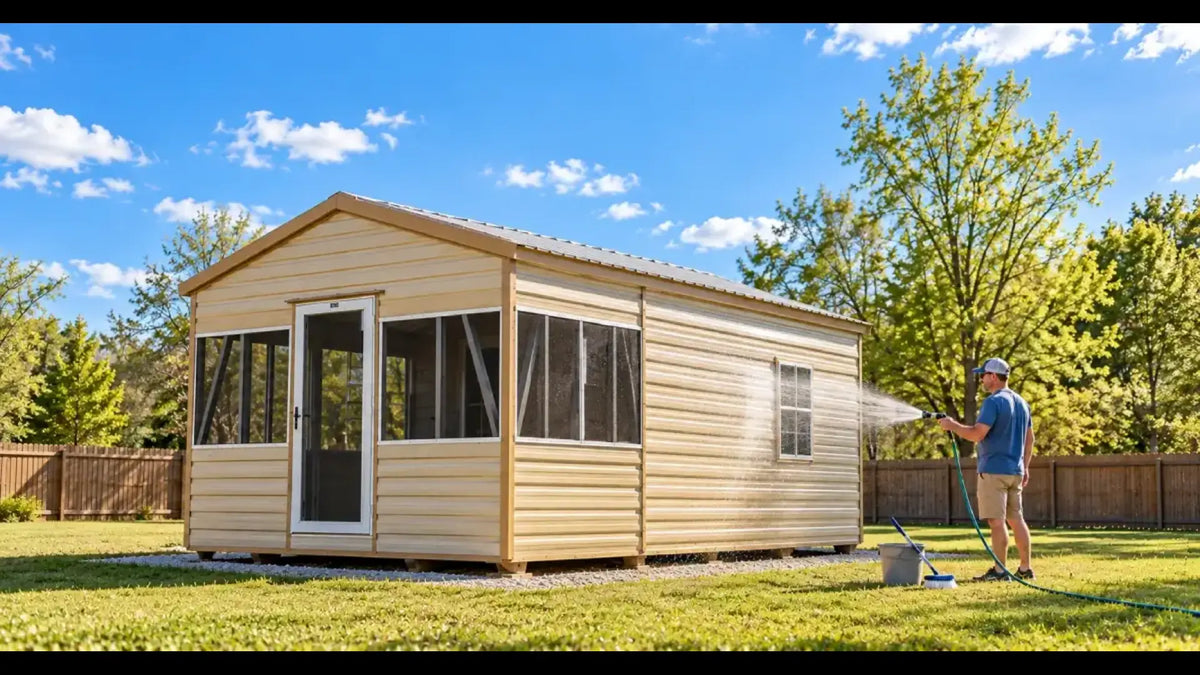
Clean it out. Remove trash, old boxes, and anything you no longer need. Clutter traps moisture and gives pests places to hide.
-
Clear the roof and base. Remove leaves and debris so water can run off and drain away from the building.
-
Check drainage. Make sure water flows away from the base instead of pooling, which matters more during freeze-thaw cycles.
-
Seal gaps. Check weatherstripping around doors and windows and replace any that’s cracked or missing.
-
Manage condensation. Keep vents clear and consider insulation to reduce moisture on the inside of the panels.
-
Move liquids that can freeze. Bring paint, water-based products, and temperature-sensitive chemicals indoors.
-
Prep your equipment. Winterize mowers, trimmers, and other power equipment before storing them.
-
Get items off the floor. Use shelves, pallets, or bins to protect belongings from moisture.
-
Inspect the roof, doors, and fasteners. Tighten loose fasteners and make sure doors close and latch securely.
-
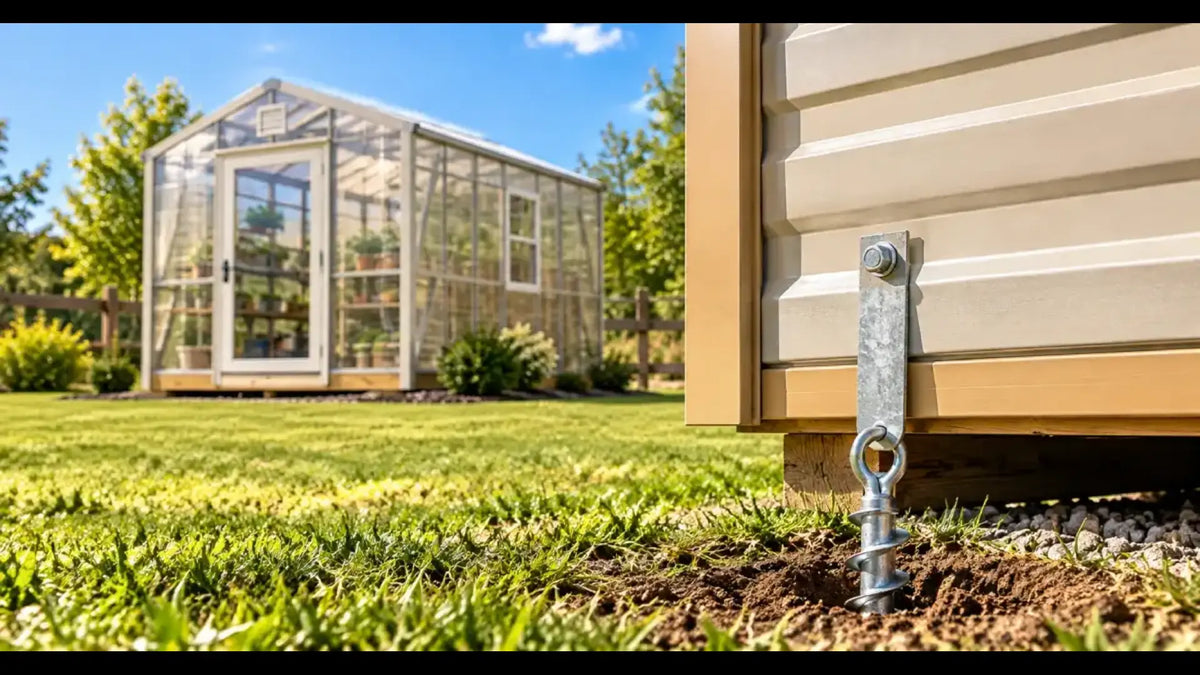
Check your anchors. Make sure tie-downs are tight before winter storms.
For a year-round routine, our guide to shed maintenance do’s and don’ts includes seasonal and after-storm checklists.
How do you control condensation in a winter shed?
Condensation is the most common winter issue for steel buildings. It forms when moist air hits cold metal, and in Birmingham’s humid climate, that can happen on many winter nights.
To keep it under control:
-
Ventilate. Keep vents open and air the shed out on dry, sunny days.
-
Insulate. Insulation keeps warm, moist air from reaching cold panels.
-
Reduce moisture sources. Don’t store wet items, and keep water from pooling near the base.
-
Use moisture absorbers in enclosed corners if humidity stays high.
Our guide to the galvanized steel shed explains how moisture affects steel over time, and how to insulate a metal shed walks through insulation options and vapor barriers.
What should you not store in a shed during winter?
Some items don’t handle freezing temperatures well. Bring these indoors or into a climate-controlled space for the winter:
-
Latex and water-based paints and stains
-
Liquid cleaners, glues, and caulk (check labels for storage temperatures)
-
Garden chemicals and fertilizers in liquid form
-
Electronics and batteries
-
Canned food or drinks
-
Anything that would be damaged by moisture, like paper records or fabrics
How do you winterize a lawn mower before storing it?
Before storing a gas mower for winter, add fuel stabilizer and run the engine briefly, or run it until the tank is empty. Clean grass and debris off the deck, check the oil, and follow your owner’s manual for battery storage. A few minutes of prep helps the mower start easily in spring.
How do you keep a shed warm in winter?
You can keep a shed noticeably warmer without any heat source at all. Start with these steps:
-
Add insulation to the walls and roof to slow heat loss.
-
Seal gaps with weatherstripping around doors and windows.
-
Cover the floor with rubber mats or rugs to reduce cold underfoot.
-
Let the sun help. Open blinds or uncover windows on sunny days to let in natural warmth.
-
Keep doors closed as much as possible when the shed is in use.
Insulation makes the biggest difference. If you’re buying a new building, adding an insulation package when you order is easier than retrofitting later. Our guide on how to customize a shed covers insulation and electrical options.
How do you heat a shed in winter safely?
If you plan to use a heated shed as a workshop, office, or hobby space, an electric heater is the safest choice for most homeowners. Your shed will need electrical service, and connecting it to your home’s power typically requires a licensed electrician.
Follow these safety rules:
-
Use an electric heater with tip-over and overheat shutoff features.
-
Plug it directly into a wall outlet, not an extension cord or power strip.
-
Keep it at least 3 feet from stored items, walls, and anything flammable.
-
Never leave it running unattended or overnight.
-
Never use fuel-burning heaters, grills, or generators inside a closed shed. They can produce deadly carbon monoxide.
-
Install a smoke alarm and keep a fire extinguisher nearby.
Pairing a heater with insulation keeps the warmth in, so the heater doesn’t have to work as hard. Our post on metal shed insulation and lighting covers how to set up a comfortable workspace.
What does a heated winter workshop look like?
Say a Birmingham homeowner uses their shed as a weekend woodworking shop. On a 35-degree January Saturday, the uninsulated shed is too cold to work in for long.
With wall and roof insulation, weatherstripped doors, a rubber floor mat, and a plug-in electric heater with safety shutoffs, the space warms up quickly and stays comfortable through the afternoon. When they’re done for the day, the heater goes off and the doors close, and the insulation keeps condensation down overnight.
How do you prepare a shed for winter storms?
Ice storms and strong winter winds can catch Birmingham off guard. Before and after severe weather:
-
Trim overhanging branches that could fall under the weight of ice.
-
Check that doors latch securely so wind can’t catch them.
-
Make sure anchors and tie-downs are tight.
-
Clear snow or ice off the roof if it builds up, using a soft broom or roof rake.
-
Inspect for damage after the storm passes.
Our guide to shed anchors explains how to tie down a shed for storm season.
What makes a good winter shed in Birmingham?
If you’re shopping for sheds in Birmingham, AL, a few features make winter much easier:
-
Steel framing, which won’t swell, rot, or warp through wet winters
-
A raised floor, which keeps stored items off cold, damp ground
-
Insulation and electrical packages for year-round use
-
Windows and vents for airflow and natural light
-
Tight-fitting doors that seal out wind and rain
Action Buildings has a location in Fultondale, just north of Birmingham. Our guide to finding the perfect metal buildings in Birmingham, AL covers local options.
Frequently Asked Questions About Winterizing a Shed
For more quick answers, visit our FAQ page.
How do I prepare my shed for winter?
Clean it out, seal gaps, manage condensation, move liquids that can freeze, prep stored equipment, and check the roof, doors, and anchors before the first freeze.
When should I winterize my shed in Birmingham?
Aim for late October or early November. Birmingham’s average first freeze arrives around November 9.
Do I need to insulate my shed for winter?
Not for basic storage, but insulation helps a lot with condensation and comfort. It’s worth it if you’ll use the shed in winter or store items sensitive to moisture.
How do I keep mice out of my shed in winter?
Seal gaps around doors and the base, store birdseed and pet food in sealed metal or hard plastic containers, and clear out clutter where mice can nest.
Can a steel shed handle snow and ice?
Yes. Steel sheds handle the light snow and ice Birmingham typically sees. Clear heavy buildup with a soft broom or roof rake, and check for damage after storms.
Final answer: how do you winterize a shed?
A winterized shed is clean, sealed, dry, and ready for the cold. Clear debris, check drainage, seal gaps, manage condensation, move anything that can freeze, prep your equipment, and check the roof, doors, and anchors before the first freeze in early November. If you’ll use the shed through the winter, insulation and a safe electric heater turn it into a comfortable year-round space.
Birmingham winters are mild compared to much of the country, but a little prep goes a long way when the freezes arrive.
Want to see winter-ready buildings in person? Visit an Action Buildings location, including our Fultondale lot just north of Birmingham.
Share:
Shed Anchors: How to Tie Down Your Shed for Maximum Stability
What Is a Galvanized Steel Shed? Rust, Upkeep, and Lifespan