

How to Keep Mice Out of a Shed (and Other Pests)
The best way to keep mice out of a shed is to seal every entry point, remove anything they can eat or nest in, and keep the area around the building clear. Steel construction helps, because mice can’t chew through it, but even a steel shed needs tight seals around doors, vents, and the base. A few simple habits keep most rodents and pests from ever moving in.
This guide covers how pests get in, how to keep them out, what not to store in a shed, and how to stop animals from nesting underneath.
TL;DR: What should you know about keeping mice out of a shed?
-
Mice can squeeze through gaps about the size of a dime, so sealing entry points is the most important step.
-
Remove food sources like birdseed, pet food, and grass seed, or store them in sealed metal or hard plastic containers.
-
Keep the area around the shed clear of tall grass, woodpiles, and clutter.
-
Block the space under the shed so animals can’t dig or nest there.
-
Steel sheds resist chewing and termites, but gaps still need to be sealed.
-
Fall and early winter are peak times for mice looking for shelter.
Why do mice and pests get into sheds?
Mice and other pests want three things: food, shelter, and a quiet place to nest. A shed often offers all three, especially if it holds seed, pet food, cardboard boxes, or fabric they can shred.
Pressure increases as temperatures drop. In fall and early winter, mice look for warm, dry places, and a shed close to the ground with small gaps is an easy target.
What are the signs of mice in a shed?
Watch for these common signs:
-
Small, dark droppings along walls, shelves, or in corners
-
Chewed cardboard, paper, fabric, or bags of seed
-
Shredded nesting material tucked into boxes or corners
-
Gnaw marks on wood items, plastic bins, or wiring
-
Scratching noises, especially at night
-
Holes or burrows along the base of the shed
If you spot any of these, act quickly. Mice reproduce fast, and a small problem can grow in a matter of weeks.
How do mice get into a shed?
Mice are good climbers and can fit through openings much smaller than you’d expect. The most common entry points are:
-
Gaps under or around doors
-
Openings around vents and windows
-
Gaps along the base where the walls meet the floor
-
Holes for wiring or pipes
-
Damaged or loose panels and trim
-
The space underneath the shed, where animals can nest or chew up through a floor
Walk around your shed with a flashlight and look for daylight from the inside. Any spot where light shows through is a potential entry point.
How do you keep mice out of a shed?
Here’s how to keep mice out of a storage shed and get it as close to a rodent proof shed as possible:
-
Seal small gaps. Fill gaps and holes with steel wool or copper mesh (which won’t rust), then seal over it with caulk or expanding foam rated for pest control. Mice can chew through foam and caulk alone, but not metal mesh.
-
Cover vents with hardware cloth. Use 1/4-inch galvanized hardware cloth so air can flow but mice can’t get through.
-
Install door sweeps and weatherstripping. Close the gap under doors and keep seals in good shape.
-
Store food in sealed containers. Keep birdseed, pet food, and grass seed in metal or hard plastic bins with tight lids.
-
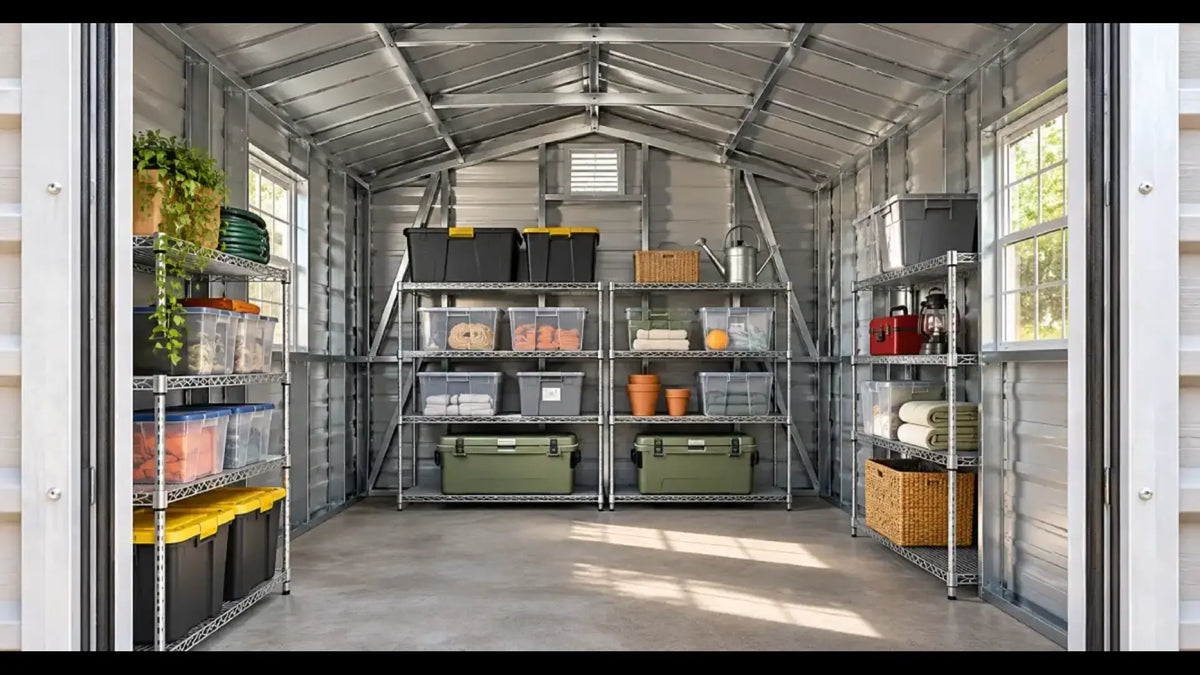
Get items off the floor. Use shelves and sealed bins instead of cardboard boxes, which mice love to nest in.
-
Clear the perimeter. Trim tall grass and plants, and move woodpiles, compost, and debris away from the building.
-
Keep doors closed. Don’t leave the shed open overnight, especially in fall.
-
Check regularly. Look for new droppings, gnaw marks, or gaps each season.
These steps work for a mouse proof storage shed of any size, and they’re the same steps that keep out rats, squirrels, and other critters.
How do you keep animals from under a shed?
The space under a shed is a favorite spot for rats, rabbits, skunks, and other animals. Rat holes under a shed are usually a sign that animals are digging in to nest.
To keep animals from under a shed:
-
Install a barrier skirt. Attach galvanized hardware cloth around the base and bury it at least 12 inches deep, bending the bottom outward in an L shape so animals can’t dig under it. This is sometimes called a rat wall.
-
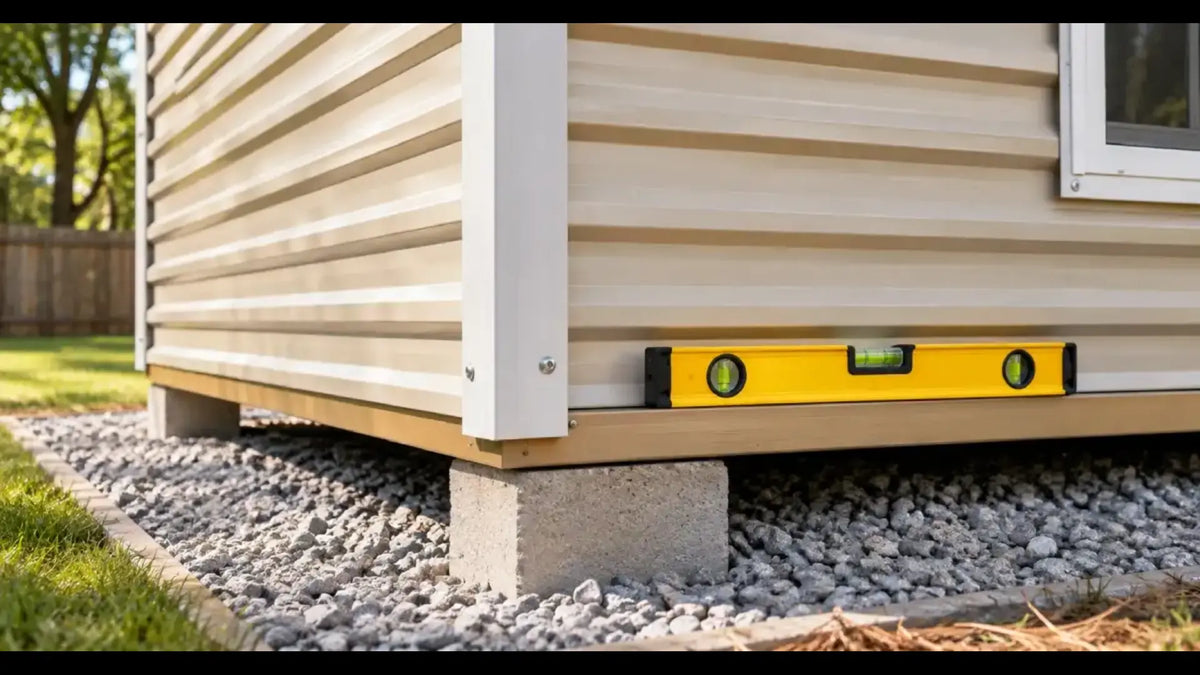
Add a gravel border. A strip of gravel around the base discourages digging and helps with drainage.
-
Fill existing holes after making sure no animals are still inside.
-
Keep the area tidy. Clutter and tall grass near the base give animals cover.
If you’re still planning your site, a gravel pad can help from the start. Our guide on how to level ground for a shed covers site prep options.
What should you not store in a shed?
Some items attract pests more than others. Store these indoors or in sealed metal or hard plastic containers:
-
Birdseed and grass seed
-
Pet food and livestock feed
-
Cardboard boxes and paper
-
Fabric, cushions, and blankets
-
Garbage or recycling
-
Anything with food residue, like grills or coolers that haven’t been cleaned
How do you keep mice out of a garage?
The same steps apply to a portable garage or workshop. Add a rubber seal or rodent guard along the bottom of the garage door, since that gap is the most common entry point. Keep the floor clear, store seed and pet food in sealed bins, and check the corners where the door meets the frame.
Are steel sheds pest-resistant?
Yes, steel sheds are naturally more pest-resistant than wood. Mice and rats can’t chew through steel framing or siding, and termites and carpenter bees have nothing to feed on. That’s a major advantage in the Southeast, where termites are a constant concern for wood buildings.
Steel doesn’t make a shed pest-proof on its own, though. Mice still look for gaps around doors, vents, and the base, and most steel sheds, including ours, have a pressure-treated wood floor. Sealing openings and blocking access underneath matters for any building. Our post comparing steel sheds with wood and plastic covers pest resistance alongside other material differences, and the best shed siding to keep weather and pests out explains how siding choices play a role.
What other pests get into sheds?
Mice get the most attention, but other pests can move in too:
-
Wasps and bees often build nests under eaves and in corners. Check for nests in spring and early summer.
-
Spiders thrive in dark, cluttered spaces. Regular cleaning and fewer boxes help.
-
Snakes follow rodents. Controlling mice and clearing tall grass usually keeps snakes away.
-
Termites target wood, which is one reason steel framing is a better fit for humid climates.
What does pest prevention look like through the year?
Say a homeowner keeps a steel shed for yard tools and a portable garage for a riding mower. In early fall, they walk both buildings with a flashlight, seal two small gaps near the shed’s base with steel wool and caulk, and add a rodent guard to the bottom of the garage door.
They move a bag of birdseed into a lidded metal can and swap cardboard boxes for plastic bins. Through the winter, they check both buildings once a month as part of their regular shed maintenance, and no mice move in. For more cold-weather tips, see our guide on how to winterize a shed.
When should you call a pest control professional?
Prevention handles most situations, but it’s time to call a licensed pest control professional if:
-
You see signs of a large or ongoing infestation
-
Rats are nesting under or inside the building
-
You find snakes, raccoons, or other wildlife you can’t safely remove
-
Problems keep coming back after you’ve sealed entry points
Once the pests are removed, seal every entry point so they can’t return.
Frequently Asked Questions About Keeping Mice Out of a Shed
For more quick answers, visit our FAQ page.
Will pests get into my steel shed?
Steel sheds are naturally more pest-resistant than wood, since mice can’t chew through steel and termites have nothing to eat. You still need to seal gaps around doors, vents, and the base to keep pests out.
Do ultrasonic pest repellers work in a shed?
Results are inconsistent, and mice often get used to the sound. Sealing entry points and removing food sources are far more reliable.
What smell keeps mice away from a shed?
Scents like peppermint oil are popular, but results are inconsistent. Sealing gaps and removing food sources work far better.
Do mothballs keep mice out of a shed?
Mothballs aren’t a good choice. They’re toxic, they’re only labeled for specific uses, and they don’t reliably keep mice away.
How do I get rid of mice already in my shed?
Remove food sources, set snap traps along the walls, and seal entry points once the mice are gone. For a large infestation, call a licensed pest control professional.
Final answer: how do you keep mice out of a shed?
Seal every gap with steel wool and caulk, cover vents with hardware cloth, add door sweeps, and block the space under the shed with a buried barrier or gravel border. Store seed and pet food in sealed containers, swap cardboard for plastic bins, and keep the area around the building clear. Check for signs of pests each season, especially in fall.
Steel construction gives you a head start, since mice can’t chew through it and termites can’t feed on it. Pair it with tight seals and good storage habits, and your shed stays pest-free year-round.
Need a secure home for a mower or workshop? Explore our portable garages, built with steel framing that pests can’t chew through.


Share:
How to Extend the Life of Your Shed Foundation
How to Extend the Life of Your Shed Foundation