

How to Level Ground for a Shed (And What Our Crew Handles for You)
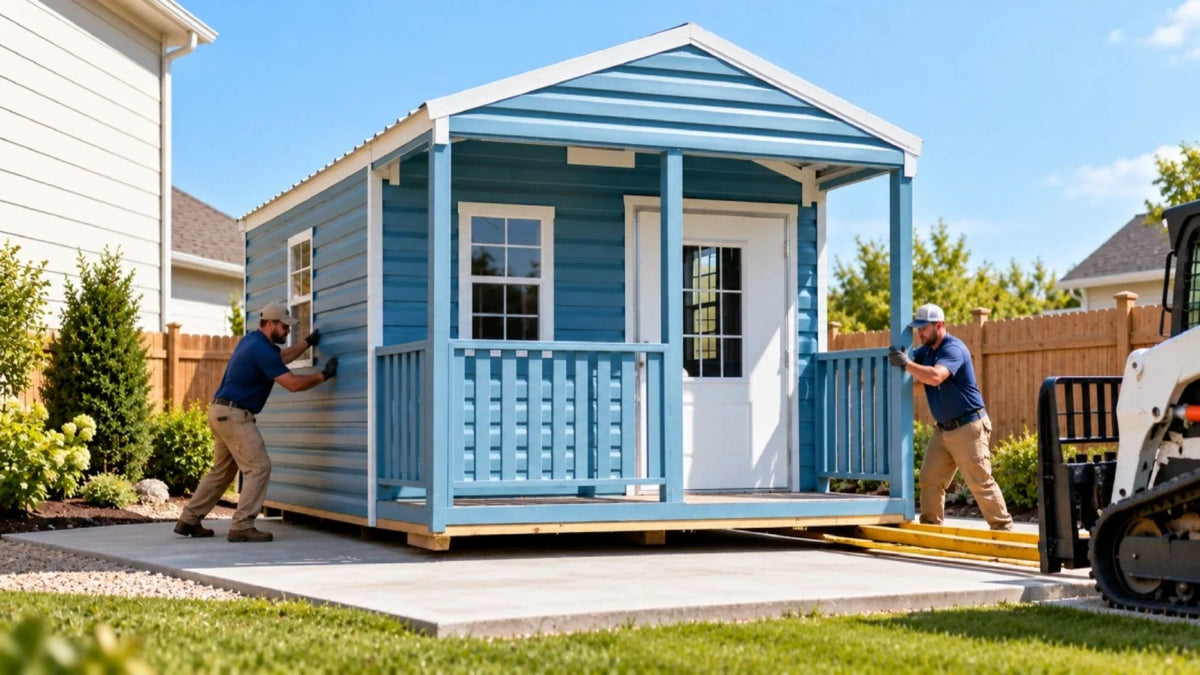
Here’s how to level ground for a shed: choose the flattest, firmest, best-draining spot in your yard, clear it of debris and vegetation, and check it for slope before delivery day. If you’re getting a delivered portable building from Action Buildings, you don’t need to make the ground perfect. Our crew sets the building on foundation blocks and handles the final leveling on site, so your job is to give them a solid, accessible starting point.
The rest of this guide explains how level is “level enough,” how to handle uneven ground, which surfaces work, and exactly where your prep ends and our crew’s work begins. If you want the broader delivery-day checklist, our shed site prep guide covers access, timing, and placement in more detail.
What should you know about leveling ground for a shed?
TL;DR:
-
You don’t need a perfectly flat yard. You need a firm, well-drained spot with a slope the crew can level out with blocks.
-
Our delivery crew handles placement and final leveling using foundation blocks included with delivery.
-
Most customers don’t need a concrete pad. Grass, dirt, or gravel can work if the ground is firm and drains well.
-
Steep slopes and low spots that hold water are the two problems to solve before delivery day.
-
The cheapest way to level ground for a shed is usually picking a better spot, not moving dirt.
-
Plan for 2 to 4 feet of open space around the building, plus a clear delivery path.
Why does level ground matter for a shed?
A building that sits out of level puts uneven stress on its frame. Over time, that can show up as doors that stick, latches that don’t line up, and windows that bind.
Drainage matters just as much as flatness. When water pools under or around a building, it softens the soil, which can let the building settle unevenly. It also keeps moisture close to the floor, which isn’t good for anything you’re storing.
Poor site prep can also delay your delivery. If the crew can’t safely reach the spot or the slope is too steep to level with blocks, the install may need to be rescheduled until the site is ready.
How level does the ground need to be before delivery?
The ground needs to be close to level, not perfectly level. A gentle slope is normal in most backyards, and the crew can level the building by stacking and adjusting foundation blocks under the low side.
Where things get harder is a true hillside. If the ground drops off sharply across the building’s footprint, blocking alone won’t create a stable base. That’s when grading or a built-up pad becomes necessary.
If you’re unsure which category your yard falls into, reach out to your local sales rep before delivery. They can help you decide whether the site is ready or needs work first.
How do you check your yard for slope?
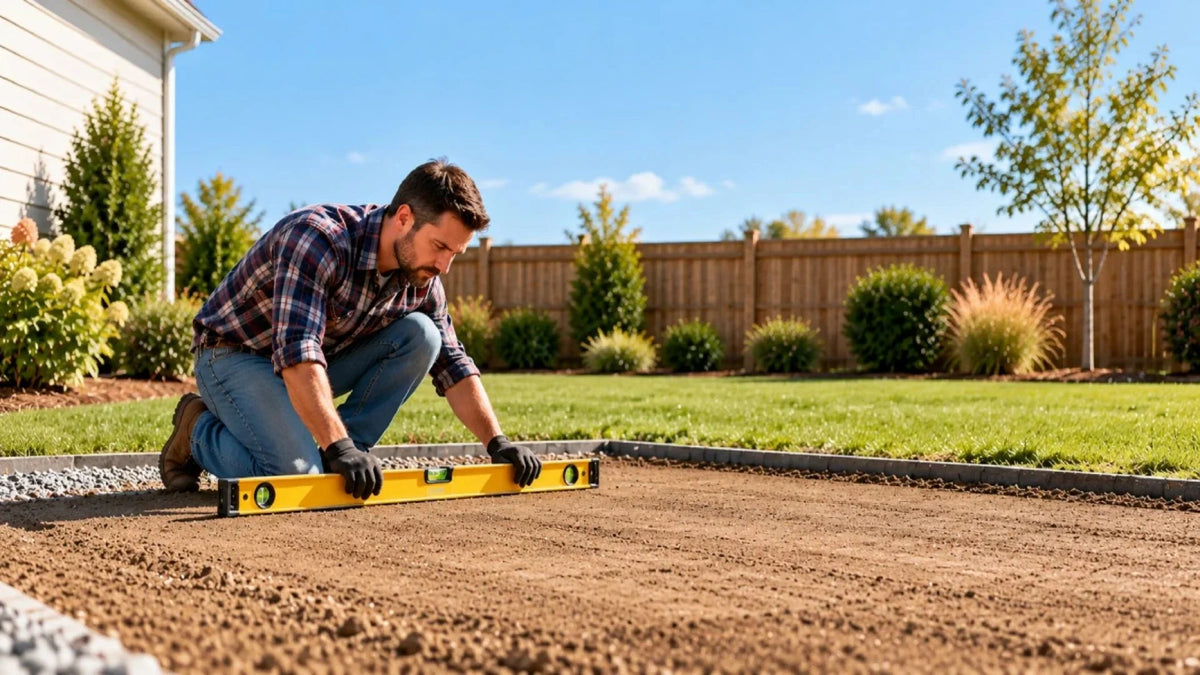
The first step in learning how to level ground for a shed is knowing how much slope you’re working with. You don’t need special equipment. Here’s a simple method:
-
Mark the footprint. Drive a stake at each corner of where the building will sit, using its actual dimensions plus a little extra room.
-
Run a string line. Tie a string between two stakes on the high side and pull it tight toward the low side.
-
Level the string. Hang a line level on the string (or rest a long board with a carpenter’s level on top) and adjust until it reads level.
-
Measure the drop. Measure from the string down to the ground at the low end. That number is how much your spot slopes across that distance.
-
Repeat in the other direction. Check both the length and width of the footprint, since yards often slope two ways at once.
A small drop is usually something the crew can handle. A large drop, or a spot that changes direction in the middle, is worth a conversation with your sales rep before delivery day.
Can you put a shed on grass, dirt, gravel, or concrete?
Yes, all four can work for a delivered portable building. What matters most is that the ground is firm, close to level, and drains well. Our buildings sit on shed foundation blocks rather than directly on the soil, which keeps the floor up off the ground.
Can you put a shed on grass or dirt?
You can put a shed on grass or packed dirt if the ground is solid and doesn’t hold water after rain. Avoid freshly dug or loose soil, which can settle under the weight of the building. Keep in mind that grass under the building will die off over time without sunlight.
Is a gravel pad good for a shed?
Yes. A gravel pad for a shed is a great option for sites with drainage concerns. Gravel lets water drain away from the building instead of collecting underneath it. Our guide to the best foundation for a shed explains how gravel pads are built and why they perform well in the Southeast’s heavy rain.
When does a shed need a concrete pad?
A concrete pad for a shed isn’t required for most of our buildings. It can make sense if you’re storing heavy equipment, using the building as a workshop, or want a permanent, very stable base. It’s also the most expensive option and takes the most prep, so it’s worth weighing against how you’ll actually use the building.
| Surface | Works for a delivered shed? | Best for | Watch out for |
|---|---|---|---|
| Grass | Yes, if firm and well-drained | Simple storage on flat, dry ground | Soft spots, standing water |
| Dirt | Yes, if compacted | Bare, flat areas | Fresh fill that can settle |
| Gravel pad | Yes | Yards with drainage concerns | Needs to be level and compacted |
| Concrete pad | Yes, optional | Heavy equipment, workshops | Highest cost, permanent |
What is the cheapest way to level ground for a shed?
The cheapest way to level ground for a shed is usually choosing a better spot. Before you spend money on dirt, gravel, or a contractor, walk your yard and compare a few possible locations.
If you do need to adjust the ground, here are your options from lowest to highest cost:
-
Pick the flattest available spot. Free, and often the best answer.
-
Clear and scrape high spots. Removing a little soil from the high side is usually better than adding fill to the low side, since new fill can settle.
-
Let the crew block out a gentle slope. Leveling with foundation blocks is part of the delivery.
-
Add a gravel pad. A moderate cost that solves drainage and minor slope at the same time.
-
Hire grading or pour a concrete pad. The highest cost, best saved for steep slopes or heavy-use buildings.
What does choosing a spot look like in a real yard?
Say a homeowner has two possible locations. The first is a perfectly flat corner by the back fence, but water collects there for a day after every storm. The second is higher up in the yard with a gentle slope from one side to the other.
The second spot is usually the better choice. The crew can level a gentle slope with blocks on delivery day, but blocks can’t fix a spot where water keeps pooling. Choosing the higher ground saves the cost of drainage work and protects the building long term.
How do you prepare uneven ground for a shed?
If your best spot still needs some work, here’s how to prepare a spot for a shed on uneven ground before delivery:
-
Clear the area. Remove rocks, stumps, roots, debris, and anything else inside the footprint.
-
Check the slope. Use the string-line method above to see how much the ground drops.
-
Remove high spots. Scrape down bumps and ridges rather than piling soil into dips.
-
Compact any loose soil. Tamp down areas you’ve disturbed so they don’t settle later.
-
Fix drainage. If water pools on the spot, consider a gravel pad or redirecting runoff before delivery.
-
Call your sales rep if the slope is steep. They can tell you whether grading is needed or whether the crew can handle it.
How much clearance do you need around a shed?
Plan for 2 to 4 feet of open space on every side of the building’s footprint. That room gives the crew space to position and level the building, and it gives you access for future upkeep like clearing debris, checking the roof, or reaching the back wall. Our metal shed maintenance checklist covers what that upkeep looks like over time.
Don’t forget the path to the spot. The delivery route should be wider than the building itself, with no low branches, power lines, fences, parked vehicles, or other obstacles in the way. Our post on what impacts your shed delivery timeline covers more on access and scheduling.
What are the most common site prep mistakes?
Most delivery-day problems come from a handful of avoidable mistakes:
-
Picking low ground. Low spots collect water and soften the soil under the building.
-
Skipping the slope check. A spot that looks flat can drop more than you’d expect.
-
Adding loose fill to low spots. Uncompacted fill settles, which can pull the building out of level later.
-
Crowding fences, trees, or the house. Too little clearance makes delivery and maintenance harder.
-
Forgetting overhead obstacles. Low branches and power lines can block the delivery path.
-
Ignoring local rules. Many cities and HOAs have setback requirements for where a building can sit, so check before you pick a spot.
-
Choosing a size before measuring the space. Our guide to backyard storage shed sizes can help you match the building to your yard.
What do you handle, and what does our crew handle?
The short version: you prepare the spot, and we level the building. If you’ve wondered how to level a shed once it arrives, that part is our crew’s job.
What should you do before delivery day?
-
Choose a firm, well-drained spot
-
Check the spot for slope
-
Clear rocks, roots, and debris
-
Clear a delivery path wider than the building
-
Trim low branches and move vehicles out of the way
-
Check local setbacks and HOA rules
-
Add a gravel or concrete pad, if you want one
What does our crew do on delivery day?
-
Unload the building
-
Position it on your site
-
Set the foundation blocks
-
Level the building with blocks
Frequently Asked Questions About Leveling Ground for a Shed
For more quick answers about buying and delivery, visit our FAQ page.
Do I need to prepare anything before delivery?
Yes, but not much. Choose a firm, well-drained spot that’s as level as possible, clear it of debris, and make sure the delivery path is open and wider than the building.
Do I need a concrete pad for my shed?
No. Most customers don’t need a concrete pad, since our crew levels the building on foundation blocks included with delivery. A pad is optional and can make sense for heavy equipment or workshops.
How much clearance do I need around my shed?
Plan for 2 to 4 feet of open space on every side of the building. That gives the crew room to install it and gives you access for future maintenance.
Can my shed go on grass or dirt instead of concrete?
Yes, as long as the ground is firm, close to level, and drains well. If water collects on the spot, a gravel pad is a better choice.
Who levels the shed on delivery day?
Our certified delivery crew levels the shed by adjusting foundation blocks under the low side until the building sits level. Steep slopes usually need grading or a built-up pad before delivery.
Can a shed sit on uneven ground without leveling?
Not safely. A shed on uneven ground puts stress on the frame and can cause sticking doors, but a gentle slope can be leveled with blocks during delivery instead of reshaping the yard.
Final answer: how do you level ground for a shed?
Start with the right spot: firm, close to level, well-drained, and easy for the crew to reach. Clear it, check it for slope, and fix any drainage problems before delivery day. For a delivered building from Action Buildings, that’s most of the work. Our crew handles placement and final leveling on foundation blocks, so you don’t need a perfect yard or a concrete pad to get started.
Ready to get your yard set for delivery? Our complete shed site prep guide walks you through everything else to check before delivery day, from access and timing to a final day-of checklist.
Share:
Steel Sheds vs. Wood and Plastic: Which Is Better for Your Yard?
Shed Delivery and Installation: What to Expect From Order to Setup