

Steel Sheds vs. Wood and Plastic: Which Is Better for Your Yard?
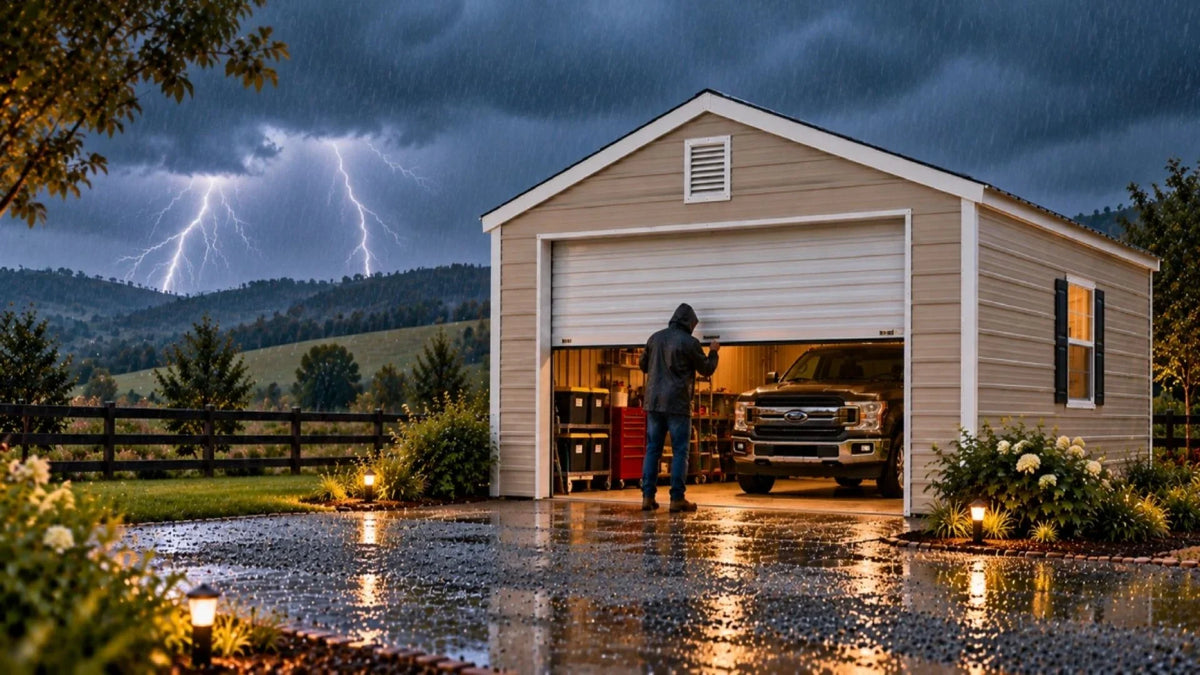
For most homeowners, steel sheds offer the best mix of lifespan, low maintenance, and storm protection, especially in the humid, storm-prone Southeast. Wood sheds win on traditional looks but need more upkeep, and plastic sheds cost less upfront but are best for small, light-duty storage. The right choice depends on what you’re storing, your budget, and how long you want the building to last.
This guide compares all three materials side by side, answers the most common questions about steel, and explains what separates a quality steel shed from a thin, entry-level kit.
What should you know about steel sheds vs. wood and plastic?
TL;DR:
-
Steel sheds typically last 20 to 30+ years with low maintenance. Wood typically lasts 15 to 25+ years with more upkeep.
-
Steel resists rot, termites, and moisture damage. Wood needs painting, sealing, and pest monitoring.
-
Plastic sheds are affordable and lightweight but are better suited to small storage than heavy equipment.
-
Galvanized and Galvalume coatings help steel sheds resist rust.
-
Not all steel sheds are equal. Steel framing, heavier-gauge steel, and a solid floor make a big difference.
-
Steel-framed buildings can be rated for winds up to 160 MPH when properly anchored.
How do steel sheds compare to wood and plastic?
Here’s how the three materials stack up on the factors that matter most:
| Factor | Steel | Wood | Plastic / Resin |
|---|---|---|---|
| Typical lifespan | 20 to 30+ years | 15 to 25+ years | Varies widely by quality |
| Maintenance | Low | Moderate to high | Low |
| Rot and moisture | Resists | Vulnerable | Resists |
| Termites and pests | Resists | Vulnerable | Resists wood-boring pests |
| Storm and wind | Strong when anchored | Moderate | Can flex or shift in high winds |
| Heavy equipment | Well suited | Well suited | Limited |
| Upfront cost | Moderate | Moderate to high | Low |
| Look | Modern, or wood-style siding | Traditional |
Simple |
Are steel sheds better than wood sheds?
For most uses, yes. Steel doesn’t rot, warp, or attract termites, and it doesn’t need regular painting or sealing to stay structurally sound. That makes steel the lower-maintenance choice over the life of the building.
One detail worth knowing: many steel sheds, including ours, still use a pressure-treated wood floor. Pressure treatment helps the floor resist rot and insects, and setting the building on foundation blocks keeps it up off damp ground.
Wood still has fans. It has a classic look, it’s easy to modify, and it can be a good fit if you enjoy upkeep projects. For a deeper look at this matchup, see our post on the metal vs. wood shed debate.
Is a metal shed better than plastic?
For most homeowners, a metal shed is better than plastic for long-term storage and heavier items. Steel handles weight, wind, and daily use better, while plastic sheds can flex, fade, or become brittle with years of sun exposure.
Plastic and resin sheds do have advantages. They’re usually cheaper upfront, lightweight, and easy to assemble, which makes them a reasonable choice for a few garden tools or pool supplies.
The deciding factor is usually what you’re storing:
-
Choose plastic for small, light items and a tight budget.
-
Choose steel for mowers, ATVs, power tools, workshops, or anything you want protected for decades.
How long do metal sheds last?
A quality steel shed typically lasts 20 to 30 years or more with basic care. That’s longer than most wood sheds, which typically last 15 to 25+ years with regular maintenance.
How long your shed lasts depends on a few factors:
-
Material quality: heavier-gauge steel and protective coatings last longer.
-
Site prep: a level, well-drained spot prevents frame stress and moisture problems.
-
Climate: humidity, storms, and sun exposure all take a toll over time.
-
Basic care: clearing debris, checking fasteners, and keeping drainage clear.
Our guide to how long portable buildings last breaks down lifespan by material. If you’re planning your site, our guide on how to level ground for a shed explains how to set your building up to last.
Do metal sheds rust?
Quality steel sheds are built to resist rust. Galvanized steel sheds have a zinc coating that protects the metal from moisture, and Galvalume roofing adds a zinc and aluminum coating designed for long-term weather resistance.
Rust usually starts where a coating is damaged, like a deep scratch from a mower handle or a dent from a fallen branch. To prevent it:
-
Touch up deep scratches or dents that expose bare metal.
-
Keep leaves, dirt, and debris off the roof and away from the base.
-
Make sure water drains away from the building.
For more on handling humidity, see which portable storage buildings resist humidity and mold.
Do steel sheds get hot inside?
Any closed building gets warm in the summer sun, and metal can heat up quickly. A few features make a big difference:
-
Windows and vents let hot air escape and improve airflow.
-
Insulation slows heat transfer through the walls and roof.
-
Lighter roof colors reflect more sunlight than darker ones.
-
Shade placement helps if your yard has a spot near trees (with enough clearance from branches).
Are steel sheds noisy when it rains?
Rain on a steel roof is louder than on shingles, especially inside an uninsulated building. Adding insulation helps dampen the sound, which is worth considering if you’ll use the shed as a workshop or office.
For storage you only visit occasionally, rain noise usually isn’t a concern.
What should you look for in a quality steel shed?
Not all steel sheds are built the same. A thin, all-metal kit from a big-box store and a steel-framed building can look similar in a photo but perform very differently. Here’s what to check:
-
Steel framing, not just steel panels. The frame carries the load. Steel framing resists warping and holds up better in storms.
-
Steel gauge. Lower gauge numbers mean thicker steel. Thicker framing is stronger and more durable.
-
Protective coatings. Look for galvanized framing and a Galvalume or similar roof coating.
-
A solid floor. Many kit sheds have no floor at all. A raised floor on joists keeps belongings off the ground.
-
Fasteners. Bolted and screwed construction holds tighter than snap-together panels.
-
Wind rating. Ask what wind speeds the building is rated for and what anchoring that requires.
What makes Action Buildings’ steel sheds different?
Here’s how our standard buildings measure up against that checklist:
-
Galvanized 18-gauge steel framing
-
Steel siding and Galvalume steel roofing
-
A ¾" pressure-treated wood floor on 2x6 floor joists set 16" on center
-
Bolted and screwed construction
-
Wind ratings up to 160 MPH when properly anchored with tie-downs
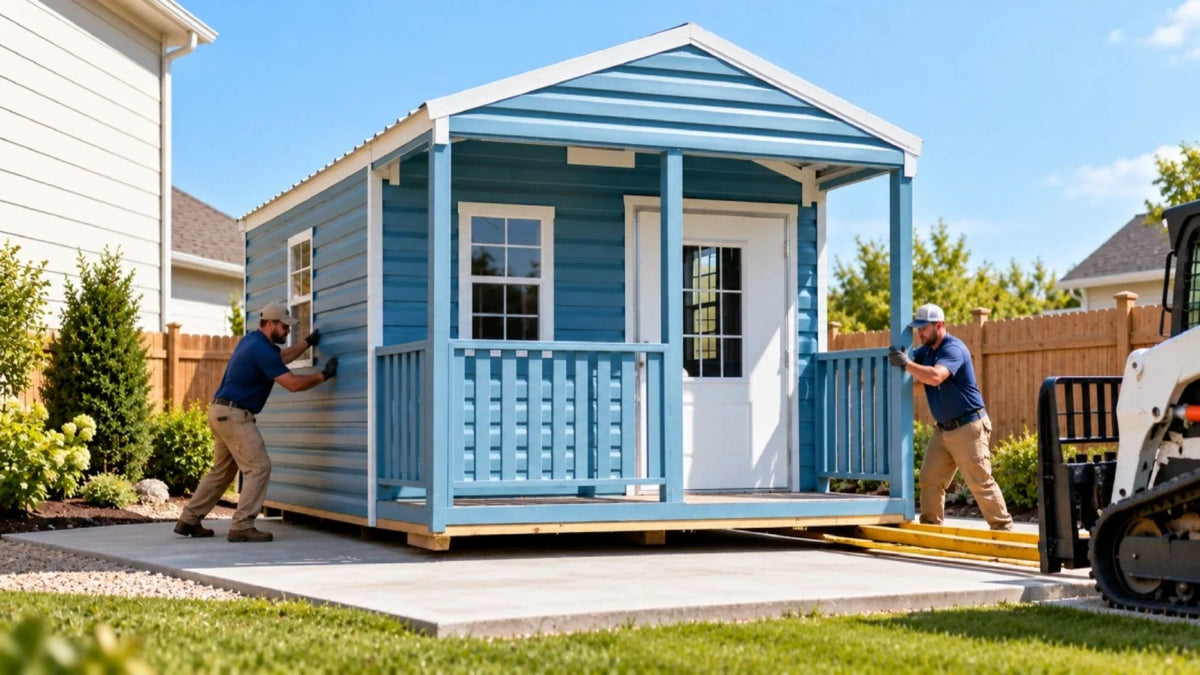
Each building also arrives fully assembled, with delivery and leveling handled by a certified crew.
Can a steel shed look like wood?
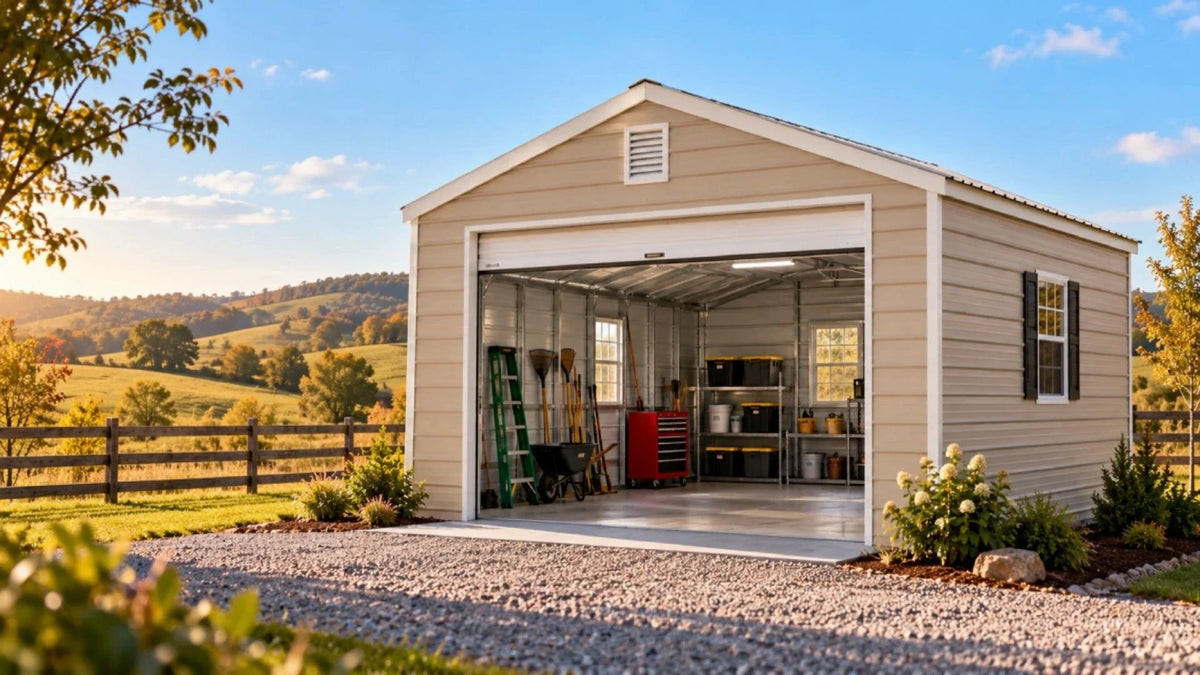
Yes. If you like the look of wood but want the durability of steel framing, wood-style siding options like LP SmartSide® are available. These can also help in neighborhoods with HOA rules about how outbuildings look.
Steel sheds also come in a range of colors you can mix and match on the siding, trim, and roof. Our guide on how to customize a shed covers siding, color, and other options.
Which shed material is right for you?
Use these quick rules to decide:
-
Choose steel if you want the longest life with the least upkeep, live in a humid or storm-prone area, or plan to store equipment.
-
Choose wood if a traditional look matters most and you don’t mind regular maintenance.
-
Choose plastic if you need simple storage for a few small items on a tight budget.
What does this look like in a real yard?
Say a homeowner needs a place for a riding mower, trimmer, and yard tools. A plastic shed costs less upfront, but it may not fit the mower or handle the weight of rolling it in and out every week.
A steel-framed building with a wood floor, a ramp, and double doors costs more at the start. But it’s built to carry heavy equipment, resists the humidity and storms common in the Southeast, and can last decades, which spreads that cost over many more years of use.
Frequently Asked Questions About Steel Sheds
For more quick answers, visit our FAQ page.
Are Action Buildings built with wood or steel?
Our standard buildings use galvanized steel framing with steel siding and roofing, plus a ¾" pressure-treated wood floor. Wood-style siding options like LP SmartSide® are also available.
What makes Action Buildings different?
Our buildings use steel framing, heavier-gauge steel, and a raised wood floor that many kit sheds don’t have. They also arrive fully assembled, with delivery and leveling handled by a certified crew.
How does steel compare to wood or plastic long-term?
Steel typically outlasts wood and plastic with less maintenance, better pest resistance, and stronger storm performance. Wood needs ongoing upkeep, and plastic is best for light-duty storage.
Are steel sheds worth the extra cost?
For most homeowners, yes. Lower maintenance and a longer lifespan often make steel the better long-term value, even if it costs more than plastic upfront.
Are galvanized steel sheds good in humid climates?
Yes. Galvanized steel resists moisture, rot, and termites, which makes it a strong fit for humid areas like the Southeast.
Do steel sheds need a foundation?
Most don’t need a concrete pad. A firm, level, well-drained site with foundation blocks works for most Action Buildings, and an optional gravel or concrete pad can help in specific situations.
Final answer: are steel sheds better than wood and plastic?
For most homeowners, yes. Steel sheds last longer than most wood sheds, need far less maintenance, resist rot and termites, and handle storms better than plastic. Wood is a good choice if a traditional look matters most, and plastic works for small, light-duty storage on a budget.
If you choose steel, look past the price tag to the frame, gauge, coatings, and floor. Those details decide whether a steel shed lasts a few years or a few decades.
Ready to compare models? Explore our steel-framed buildings to find the size and style that fit your yard.
Share:
How to Customize a Shed: Lofts, Windows, Porches, and More
How to Level Ground for a Shed (And What Our Crew Handles for You)