

How to Extend the Life of Your Shed Foundation
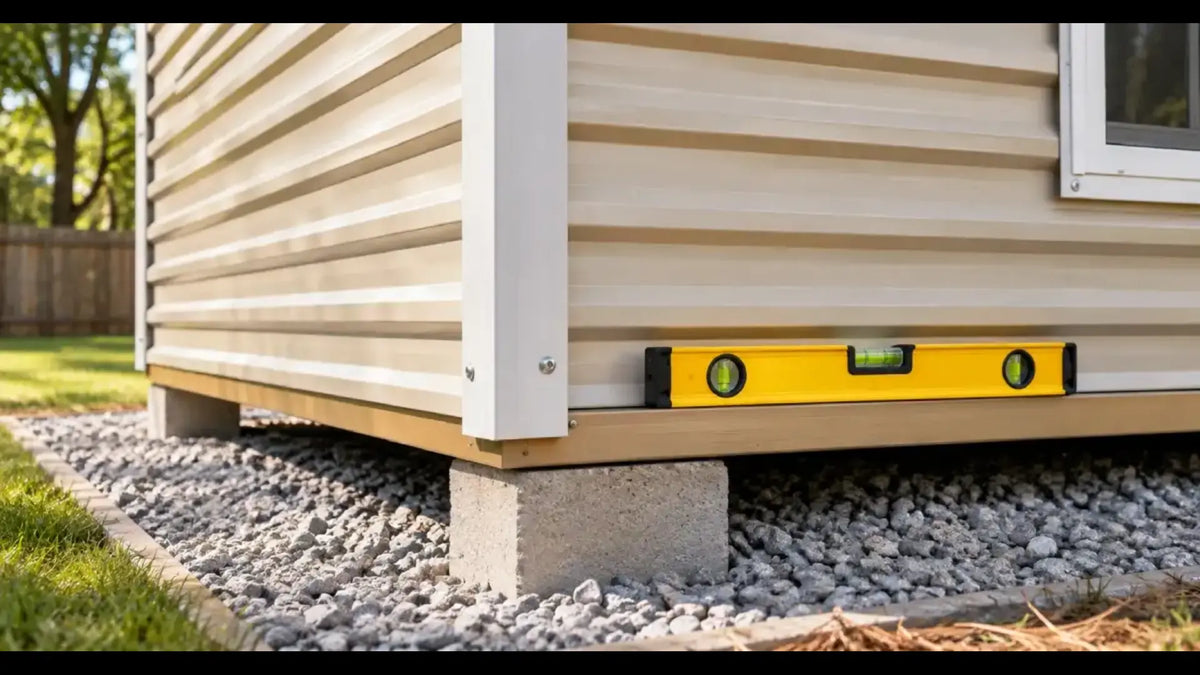
Most shed foundation repair comes down to three things: fixing drainage, replacing or resetting shifted blocks, and re-leveling the building before small settling turns into bigger problems. To make a foundation last, keep water flowing away from the base, check the blocks and ground under the shed each season, and act quickly when a corner starts to sink.
This guide covers the warning signs of foundation trouble, what causes it, how to maintain your foundation, and which repairs you can handle yourself.
TL;DR: What should you know about shed foundation repair?
-
Sticking doors, gaps at the base, and a building that looks out of level are early signs of foundation trouble.
-
Water is the most common cause. Poor drainage softens soil and lets blocks sink unevenly.
-
Check your foundation each season and after heavy storms.
-
Fixing drainage and adding gravel are simple DIY repairs.
-
Jacking up or lifting a shed to re-level it is safest left to professionals.
-
Catching problems early protects the building’s frame, doors, and floor.
What are the signs a shed foundation needs repair?
Foundation problems usually show up in the building before you see them in the ground. Watch for:
-
Doors that stick, rub, or won’t latch
-
Windows that bind or won’t close smoothly
-
A visible tilt when you look at the building from a distance
-
Gaps between the floor and the base on one side
-
Cracked, tipped, or sunken blocks under the building
-
Water pooling around or under the shed after rain
-
Soft or eroded ground near one corner
Any one of these is worth a closer look. A quick check with a level on the floor or base rail will tell you whether the building has shifted.
What causes shed foundation problems?
Most foundation issues trace back to the ground under the shed, not the blocks themselves. The most common causes are:
-
Poor drainage. Water that pools under or around the shed softens the soil, and blocks sink into it.
-
Erosion. Heavy rain can wash soil or gravel out from under one side.
-
Loose or fresh fill. Soil that wasn’t compacted before the shed went in can settle over time.
-
Shifting or cracked blocks. Blocks can tip or crack if the ground beneath them moves.
-
Tree roots. Growing roots can lift or shift blocks near trees.
-
Freeze-thaw cycles. In colder snaps, wet ground can expand and contract, nudging blocks out of place.
In the Southeast, heavy rain and clay soil that holds water make drainage the biggest factor by far.
How do you keep a shed foundation in good shape?
A few simple habits keep most foundations solid for the life of the building:
-
Keep water moving away. Make sure the ground slopes away from the shed and downspouts or runoff don’t drain toward it.
-
Check after heavy rain. Look for standing water or washed-out areas around the base.
-
Keep the perimeter clear. Don’t pile mulch, soil, or debris against the base, where it traps moisture.
-
Top up gravel as needed. If you have a gravel pad, add gravel where it has washed away or thinned out.
-
Inspect the blocks each season. Look for cracks, tipping, or blocks that have sunk lower than the others.
-
Check the level. Set a level on the floor or base rail once a season to catch settling early.
-
Watch nearby trees. Keep an eye on roots growing toward the building.
These checks fit easily into your regular shed maintenance routine.
How long does a cinder block shed foundation last?
Concrete and cinder blocks are durable and rarely wear out on their own. When a cinder block shed foundation fails, it’s almost always because the ground beneath it shifted, washed out, or stayed too wet.
That means a block foundation can last as long as the building if the site drains well and the blocks stay level. Replacing a single cracked or sunken block is usually a quick repair for a crew with the right equipment to support the building.
If you’re curious how block foundations compare to gravel and concrete, our guide to the best foundation for a shed breaks down each option, and how to build a shed foundation covers how they’re put in.
How do you repair a shed foundation?
The right repair depends on what’s causing the problem. Use this quick guide to match the symptom to the fix:
| What you notice | Likely cause | Typical fix |
|---|---|---|
| Water pooling around the base | Poor drainage | Regrade, redirect runoff, add a gravel border |
| One corner sinking | Washed-out or soft soil | Fix drainage, then re-level |
| Cracked or tipped block | Ground movement under the block | Replace or reset the block |
| Door sticking or rubbing | Building out of level | Check the level, then re-level |
| Gravel thinning at the edges | Erosion | Top up gravel and improve drainage |
Here’s how each of the most common fixes works.
How do you fix drainage under a shed?
Start by finding where water is coming from. Regrade the soil so it slopes away from the building, redirect downspouts or runoff, and consider adding a gravel border around the base so water can soak in instead of pooling. Fixing drainage first keeps the same problem from coming back after other repairs.
Can you add gravel under an existing shed?
You can add gravel around the base and fill in washed-out areas along the edges. Adding a full gravel pad under a shed that’s already in place usually requires lifting the building, which is a job for professionals.
How do you fix cracked or sunken blocks?
A cracked or sunken block needs to be replaced or reset, but the building has to be safely supported first. Because that usually means lifting part of the shed, it’s best handled by a professional with the right equipment.
How does shed leveling work?
Shed leveling means bringing the building back to level by adjusting the support underneath it. Leveling a shed with blocks typically involves lifting the low side slightly, adding or adjusting blocks and shims, and then setting the building back down evenly. For most portable buildings, this is quick work for a trained crew.
Can you jack up or lift a shed yourself?
It’s possible, but it isn’t recommended for most homeowners. Jacking up a shed or lifting a shed puts a heavy load on a small point, and a slipped jack or uneven lift can damage the frame or cause injury.
Lifting a building safely takes the right jacks, cribbing, and experience. Our crews level every building at delivery, so if yours needs to be re-leveled later, contact your local Action Buildings location to ask about getting it back on solid footing.
What does a foundation repair look like in a real yard?
Say a homeowner notices their shed door has started rubbing at the top corner after a rainy spring. They set a level on the floor and find it’s lower on the side closest to the downspout.
Looking underneath, they see the soil around one block has washed out and the block has sunk. They redirect the downspout away from the shed and add a gravel border along that side. Then they call their local location to have the building re-leveled. With the drainage fixed, the shed stays level and the door closes smoothly again.
When does it make sense to move a shed instead?
Sometimes the problem is the spot itself. If a location floods regularly, sits in the lowest part of the yard, or keeps settling after repairs, moving the building may be the better long-term fix.
One advantage of a portable building on foundation blocks is that it can often be relocated. Our post on metal shed storage buildings you can move explains how portability works, and our guide on how to level ground for a shed covers what to look for in a new location.
Does a re-leveled shed need to be re-anchored?
If your shed is anchored, check the anchors and straps after any re-leveling or foundation repair. Lifting the building can loosen straps or shift anchors, so they may need to be tightened or reset. Our guide to shed anchors explains how anchors and tie-downs should fit.
Frequently Asked Questions About Shed Foundation Repair
For more quick answers, visit our FAQ page.
How do I maintain my shed’s foundation?
Keep water draining away from the base, check the blocks and level each season, top up gravel where it washes out, and keep mulch and debris away from the building.
Can I level a shed with shims?
Shims work for small adjustments. Use rot-resistant composite or pressure-treated shims on solid blocks, and avoid stacking loose wood, which can compress or rot over time.
How often should I check my shed’s foundation?
Check it once a season and after any heavy rain or storm. A quick look and a level on the floor take just a few minutes.
Can a sinking shed be fixed without moving it?
Usually, yes. Fixing drainage and re-leveling the building on its current spot solves most problems. Moving it makes sense only if the location keeps flooding or settling.
Can a sinking foundation damage my shed?
Yes. A building that sits out of level puts stress on the frame and can cause sticking doors, binding windows, and gaps where water gets in. Fixing settling early prevents bigger repairs.
Final answer: how do you make a shed foundation last?
Keep water moving away from the base, check the blocks and level each season, and fix small issues like washed-out soil or a sinking corner early. Most shed foundation repair is simple once drainage is under control, and re-leveling the building is a quick job for a trained crew.
Treat your foundation as part of your regular maintenance, and it will support your shed for years.
Need help re-leveling your building? Contact our team to connect with your local Action Buildings location.


Share:
How to Protect Your Shed from Pests and Rodents
How to Protect Your Shed from Pests and Rodents