

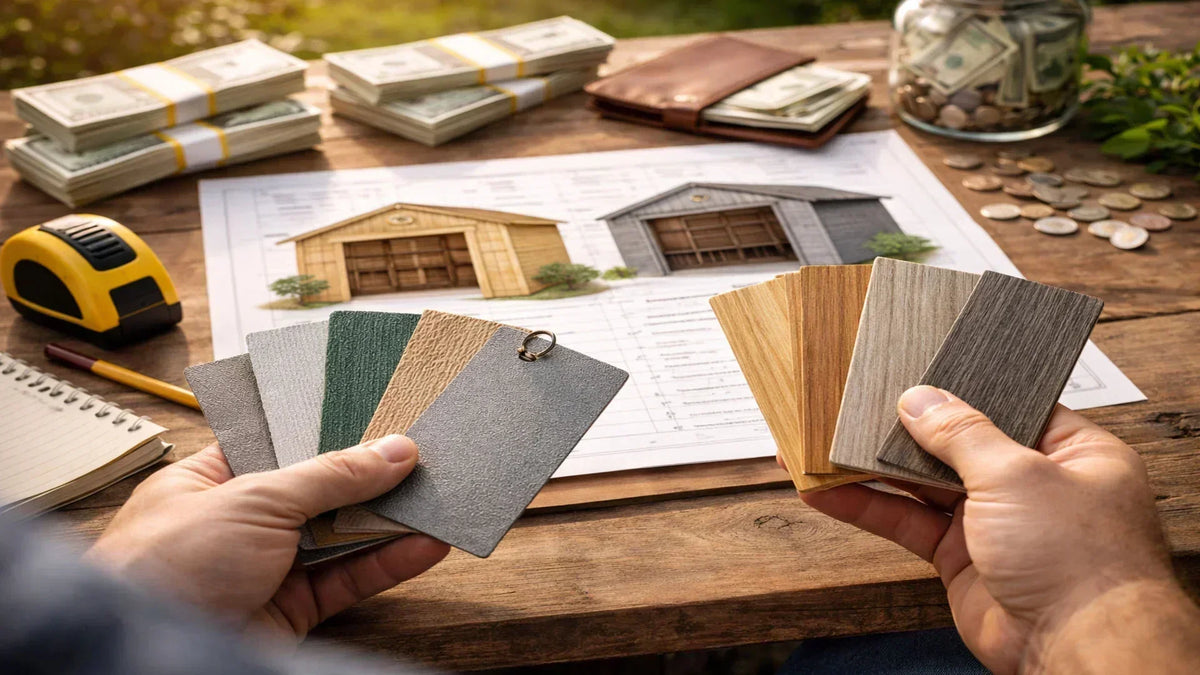
Buying a shed should simplify your life, not complicate your budget. Yet many homeowners face unexpected expenses when they finally commit to adding storage space. One website quotes $3,000 for a basic unit, another advertises DIY kits starting at $500, and suddenly you're wondering if that "great deal" includes delivery, site prep, or even a floor.
Understanding the cost of a storage shed means looking beyond the sticker price. Whether you need secure backyard storage for lawn equipment, Category 5 hurricane protection for your vehicles, or a pre-wired workshop space, this guide breaks down the real numbers so you can budget confidently and avoid unpleasant surprises.
Understanding the Factors That Impact Shed Cost
Talking about pricing isn’t always fun, especially when it comes to spending decisions.
But here’s the thing: understanding pricing doesn’t have to feel overwhelming or intimidating. It’s all about breaking it down into manageable pieces so you can see the full picture clearly. Taking the time to understand where your money is going gives you more confidence and control.
Let’s dive into how to understand storage shed cost in a way that makes sense and helps you make smart, informed decisions without the stress.
Factors that impact shed pricing can be categorized in three ways:
Base Structure Cost: This includes the shed's frame, walls, roof, and basic access door. For steel buildings, machined components ensure precision and reduce waste, keeping base costs competitive with wood alternatives.
Labor and Installation: DIY shed kits save money but require carpentry skills and power tools. Professional assembly adds to the cost of custom builds. Fully assembled shed delivery options (commonly available with metal sheds) eliminate those expensive labor costs entirely.
Customization and Upgrades: Every feature beyond the basics may increase the final cost of your shed. Prioritize upgrades that serve your primary purpose. If you're storing lawn equipment, extra shelving matters more than premium windows. If you're creating a workshop, electrical pre-wiring and insulation become essential.
Average Shed Cost Breakdown by Size & Usage Needs
Shed sizes and prices can vary depending on what you need it for, the materials you choose, and the level of customization you want. Here’s a quick breakdown of what you can expect for different shed sizes:
Small Sheds (8×12 or smaller)
If you just need something to store garden tools, fertilizers, or seasonal equipment, a small shed is a great option. These compact sheds are budget-friendly and super practical for basic storage needs without taking up too much space. You can find cheap vinyl or resin models, as well as sturdier steel-framed options, some of which are even hurricane-rated for extra durability.
Medium Sheds (10×12 to 12×20)
This is the sweet spot for most homeowners. Medium sheds are perfect for storing lawn mowers and bikes, and often have enough room for overhead storage. They strike a great balance between size and functionality, making them large enough to double as a small workshop or hobby space without dominating your yard.
Large Sheds (14×32 to 16×60)
Need something bigger? Large sheds are ideal for storing vehicles and farm equipment, or for setting up a backyard business space. Options include portable garages, mini barns, and steel greenhouses. While they are a bigger investment, custom features like insulation, pre-wired electrical, or wall framing can transform them into highly functional, versatile additions to your property.
When deciding on a shed, consider whether you want a prefabricated kit or a fully custom build. Prefab steel buildings come ready to use, while wood sheds often require on-site labor, which can add to both the timeline and the total cost.
Pricing Breakdown by Shed Size
| Shed Size | Budget Range | Ideal Use Cases |
| Small (8×12 or smaller) | $240–$3,800 | Garden tools, seasonal storage |
| Medium (10×12 to 12×20) | $1,800–$19,200 | Lawn equipment, workshops, hobby spaces |
| Large (14×32 to 16×60) | $7,700–$76,800 | Vehicles, farm equipment, business spaces |
Steel vs. Wood Sheds: How Material Choice Impacts Long-Term Value
Your choice of material affects both the upfront price of your shed and its total lifetime cost. This is especially true for homeowners in Southern states where extreme weather is a big factor.
Wood Sheds: The Classic Choice
Upfront Cost: $3,000–$15,000
There’s no denying the classic, natural look of a wood shed. However, Southern humidity can be tough on wood, causing it to rot and decay more quickly. Pests like termites and carpenter ants also love the climate, meaning you'll need to stay on top of regular inspections and treatments. To keep your shed from warping and weathering, you'll also have to repaint or restain it every few years.
The Reality of Maintenance: Plan on budgeting an extra $200–$500 each year for upkeep. That doesn't include potential structural repairs that might arise as the shed ages.
Steel Sheds: The Durable Alternative
Upfront Cost: $500–$9,000
With an all-steel shed, you can forget about rot, decay, and pests. Steel buildings are built tough, with some even rated to withstand Category 5 hurricane winds over 155 mph.
Better yet, steel is virtually maintenance-free. No painting, no termite treatments, and no worrying about hail damaging your roof or wind tearing off siding. If you’re storing valuable items like vehicles, lawn equipment, or family heirlooms, that peace of mind can save you real money and stress over the years.
Long-Term Value: Steel sheds often come with 20- to 30-year warranties, while wood sheds typically only offer 5–10 years of coverage. When you add up the total cost over a couple of decades, steel often ends up being the cheaper option, even if the initial price is a bit higher.
Quick Cost Comparison
While a wood shed might seem like a bargain with its lower upfront cost, the long-term expenses can add up quickly. A steel shed may have a slightly higher initial price, but its durability and long warranty mean you'll likely spend far less on maintenance and repairs down the road, making it a smarter investment for the long haul.
Don’t Overlook These Other Potential Shed Costs
The true cost of a shed goes beyond the initial price tag, but understanding what’s included (and what adds value) can help you make the most of your investment. Here’s what to consider when planning for your shed.
Delivery and Setup
When you buy a shed, delivery and setup are important factors. Some companies charge extra for delivery or on-site assembly, which can add up quickly. Choosing a steel building that’s delivered fully assembled can save you time, hassle, and surprise labor costs. With no debris, no construction crews, and no hidden fees, you’ll have a streamlined process and a shed that’s ready to use right away.
Site Preparation
A good foundation is key to ensuring your shed lasts for years. Whether you choose a gravel pad or a concrete slab, site preparation ensures your shed is stable and secure. Investing in proper groundwork pays off in durability and longevity, making your shed better equipped to handle the elements.
Permits and Inspections
Depending on your shed’s size and features, you may need a building permit. While this might seem like an extra step, the process ensures your structure meets local standards and safety requirements, giving you peace of mind.
Electrical Wiring
Need power in your shed? Pre-wired buildings can save you time and money compared to hiring an electrician after installation. With outlets, lights, and breaker boxes already in place, you can start using your shed for work, hobbies, or storage as soon as it’s installed.
Insulation and Climate Control
If you plan to use your shed year-round, adding insulation and climate control makes it more comfortable and versatile. Whether it serves as a workshop, home office, or creative studio, creating the right environment adds immeasurable value to your space.
Customization Options
Customizing your shed lets you tailor it to your specific needs. From windows and doors to shelving, skylights, and workbenches, these upgrades enhance functionality and usability. A workshop benefits from electrical outlets and lighting, while a simple storage shed might only need basic access. Think about how you’ll use the space and prioritize features that matter most to you.
Flexible Payment Options
Some shed companies offer flexible payment plans, including rent-to-own options. They allow you to get the structure you need without major upfront costs. If you’re able to, traditional financing or cash purchases may offer additional savings.
Investing in a shed is about more than just the upfront cost; it’s about creating a functional, durable space that adds value to your property and improves your daily life. By considering your specific needs and focusing on quality, you’ll ensure your shed is a smart investment for years to come.
Things to Consider When Shed Pricing Is Giving You Sticker Shock
It’s easy to get sticker shock when you start pricing out sheds. When you see the cost of a high-quality steel building next to a budget wood shed from a big-box store, it can feel like a huge leap.
But before you let that initial price tag make the decision for you, let’s break down the real numbers. Here’s the math every homeowner should consider to see where the true value lies:
Self-Storage vs. Ownership
Renting a 10×10 climate-controlled storage unit costs $75–$150 per month, depending on location. Over five years, that's $4,500–$9,000 in rental fees with zero equity. A comparable steel shed costs $4,000–$6,000 upfront, and you own it. If you move, it moves with you.
Labor Savings
Pre-assembled delivery eliminates contractor fees, on-site construction permits, and the hassle of coordinating multiple tradespeople. What wood shed buyers spend on framing, roofing, and finishing, steel shed owners invest once in a structure engineered to last 30+ years.
Maintenance Costs Over Time
Wood sheds require ongoing investment in staining, repairs, and pest control. After 15 years, total maintenance costs often equal or exceed the original purchase price. Steel sheds need simple, occasional cleaning.
When you calculate the cost per year of use, steel buildings often cost less than $200 annually. Wood sheds, factoring in maintenance and eventual replacement, can exceed $600 per year. Additionally, wood sheds will need to be replaced far sooner than metal sheds, which are built to last for a lifetime with minimal upkeep.
Make the Smart Investment in Long-Term Value with Metal Sheds
The true measure of shed cost isn't the initial price; it's what you pay over the life of the building. Cheap sheds deteriorate quickly in Southern climates. Wood requires constant upkeep. Self-storage drains your budget with nothing to show for it.
Steel buildings engineered for durability offer Category 5 protection, maintenance-free ownership, and the flexibility to relocate if needed. Whether you're decluttering your garage, protecting valuable equipment, or launching a backyard business, investing in quality construction pays dividends in convenience, security, and peace of mind.
Budget for the shed that fits your needs today and grows with you tomorrow. The right storage solution simplifies your life without breaking the bank.
Contact us for a quote & discover the potential of affordable storage sheds


Share:
Backyard Greenhouses: Grow More, Spend Less (+ Cost Info)
Is a Metal Garage Shed Worth the Price? Here's the Truth