

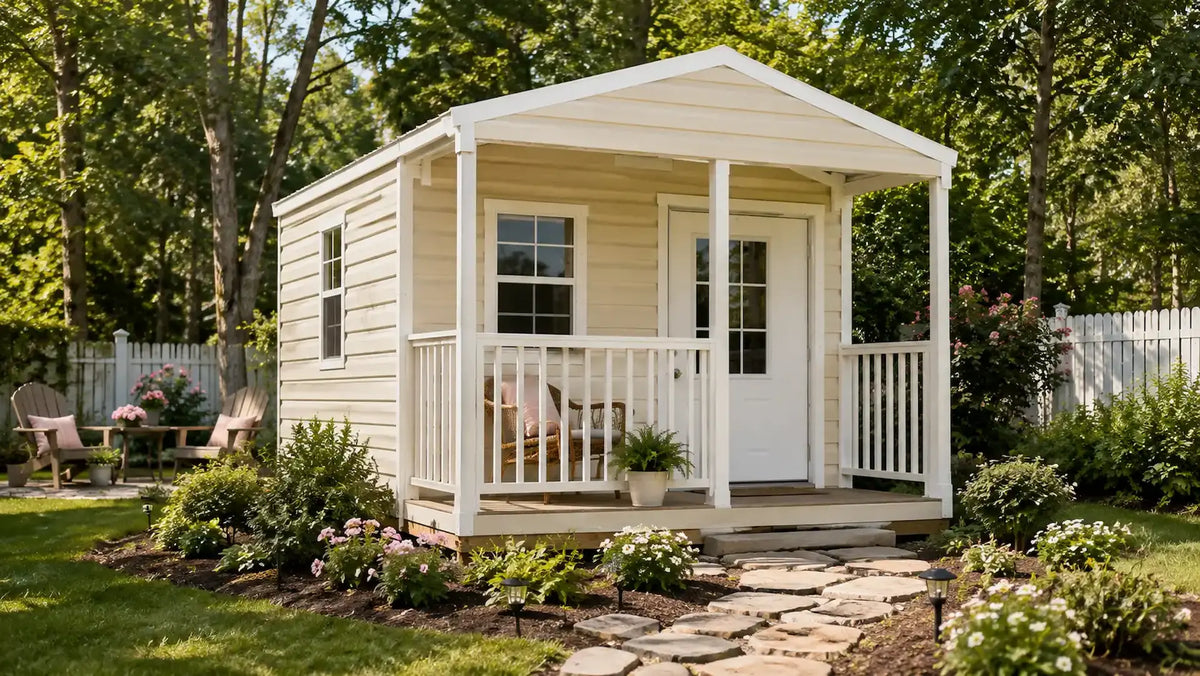
A dream she shed starts with a clear purpose, not a floor plan. Once you know whether it's a craft studio, a quiet retreat, or a bit of both, the right size, windows, doors, and porch options fall into place a lot more easily.
From there, it's about building outward: choosing exterior details that fit your home and yard, designing the interior around how you'll actually use the space, and finishing with the landscaping that makes it feel like part of the property instead of an afterthought.
What should you know about designing a she shed?
-
Start with purpose, craft studio, retreat, hobby room, or flexible space, before choosing size or layout.
-
Size should be based on furniture, storage, and how much room you need to move around comfortably.
-
Windows, doors, and a porch have a bigger impact on daily use than most people expect.
-
Exterior colors and siding work best when they complement the main house and landscape.
-
Landscaping and finishing touches are what make a she shed feel like part of the yard, not separate from it.
You can browse building styles to start planning in Action Buildings' full collection of portable buildings.
What should you use your she shed for?
The purpose you choose shapes almost every other decision, from square footage to where the windows go, so it's worth settling this first.
-
Craft or art studio: built around work surfaces, supplies, and natural light
-
Quiet retreat: built around comfort, calm, and getting away from household noise
-
Hobby room: built around whatever gear your hobby actually requires, from sewing machines to woodworking tools
-
Flexible, multi-use space: built to shift between two or more of the above without feeling cluttered
It's fine for the purpose to evolve over time, but designing around a clear starting point makes the whole project easier than trying to plan for everything at once. Even a rough sense of your top priority, quiet versus creative, solo versus social, gives you a much clearer starting point than trying to design for every possibility simultaneously.
What size she shed do you need?
Size comes down to what has to fit inside and how much room you need to move comfortably, not just floor space on paper.
Primary Use / What to Plan Around
-
Craft or art studio / Work surfaces, supply storage, and room to step back from a project
-
Quiet retreat / Seating, a small side table, and enough open space to feel calm rather than boxed in
-
Hobby room / Whatever equipment the hobby requires, plus storage for supplies and finished projects
-
Flexible, multi-use space / Furniture that can be rearranged or multifunctional, plus a bit of extra square footage
It's also worth planning a little room to grow. A she shed that fits everything with some breathing room stays comfortable years down the road, while one sized exactly for today's needs can start to feel tight quickly.
What exterior design choices matter most for a she shed?
The exterior is what makes a she shed feel like a real part of the backyard instead of a box that got dropped there. A few decisions carry most of the visual weight:
-
Siding style and texture
-
Exterior color, ideally something that complements the main house
-
Window style and placement
-
Door style, including whether it opens in, out, or as a double door
-
Whether to add a porch
How do you choose siding and color for a she shed?
The easiest approach is to pull from colors and materials already on your home, a matching or complementary shade, similar trim details, or a shared roofing style. This keeps the she shed from reading as a separate structure and instead makes it look like it was planned alongside the house from the start.
Why do windows and doors matter so much?
Windows bring in natural light, which matters for almost every use case, but especially for a craft or art studio where color and detail work benefit from daylight rather than artificial light alone. Door placement matters just as much: a door positioned poorly can make it awkward to move furniture, easels, or equipment in and out, while the right placement makes daily use effortless.
Is a porch worth adding?
For most she sheds, yes. A porch extends usable space beyond the building's four walls, giving you a spot for morning coffee, reading, potted plants, or simply sitting outside the door without stepping straight into the yard. It also softens the transition between the building and the landscape, which helps the whole space feel more finished. Even a small porch, just a few feet deep, can make the entrance feel intentional instead of like an afterthought.
How should you design the interior around how you'll use it?
Once the exterior is settled, the interior is where the space actually starts to feel like yours.
How do you design a she shed for a craft or art studio?
Prioritize dedicated work surfaces, organized storage for supplies, open shelving you can see into at a glance, and enough natural light to work by throughout the day. Leaving room to step back from a project, literally and visually, makes the space far more usable than cramming in every surface you can fit.
How do you design a she shed as a quiet retreat?
Comfortable seating, warm lighting, bookshelves, plants, and a few personal touches turn a plain building into an actual escape. Keeping the layout simple, rather than filling every corner, tends to support the calm feeling most people are after.
How do you design a flexible, multi-use she shed?
Multifunctional furniture, like a fold-down work surface or seating that doubles as storage, lets the same room shift between a creative workspace and a relaxing retreat. The key is keeping the layout open enough that switching modes doesn't feel like rearranging an entire room.
How do landscaping and finishing touches complete a she shed?
The building itself is only part of the picture. Landscaping is what connects it to the rest of the yard:
-
A pathway leading up to the door
-
Flower beds or shrubs along the base of the building
-
Container gardens or window boxes under the windows
-
Outdoor lighting for evening use and safety
-
Porch furniture, if you've added a porch
These details also add privacy, softening sightlines from the house or neighboring yards, and they're often what makes a she shed feel like it's always belonged on the property. Even a few of these, rather than all of them at once, can make a noticeable difference in how finished the space feels.
Which Action Buildings option works best for a she shed?
A custom building gives you the most control over windows, door placement, porch options, and exterior color, which matters most for a she shed built around a specific look and feel. For homeowners who like a classic, barn-style silhouette, a lofted barn also works well as a she shed foundation, with loft space that can double as extra storage.
If you want more detail on specific features like electrical packages, insulation, and layout options, our guide on backyard storage building upgrades covers those in depth.
Why choose Action Buildings for your she shed?
Action Buildings builds steel portable buildings that can be customized well beyond basic storage, with the windows, doors, porch options, and exterior finishes that turn a building into a genuinely personal space. The same steel construction that holds up against Southeast weather also means your she shed stays low-maintenance long after the design work is done.
You can explore options at one of Action Buildings' locations, review financing options, or request a quote to start planning your she shed.
Frequently Asked Questions About Designing a She Shed
What is a she shed used for?
A she shed can be used for almost anything: a craft or art studio, a quiet retreat, a hobby room, or a flexible space that shifts between purposes. The right use is whatever fits how you actually want to spend your time.
How big should a she shed be?
Size depends on the furniture, storage, and equipment your primary use requires, plus enough room to move comfortably. Planning a little extra space for future needs is usually worth it.
Do she sheds need electricity?
Electricity isn't required, but it makes a she shed far more functional for lighting, tools, a fan or heater, or charging devices. It's worth planning for early if you think you'll want it, since adding it after the building is finished is more disruptive than wiring it in from the start.
Can a she shed have a porch?
Yes. A porch is one of the most popular additions, extending usable space outside the building and creating a natural spot for seating, plants, or morning coffee.
How do I make my she shed match my house?
Matching or complementary siding, exterior color, and trim details are the easiest ways to tie a she shed visually to the main house.
Can I finance a custom she shed?
Yes. Action Buildings offers financing options to help make a custom-designed she shed more affordable.
Final answer: how do you design your dream she shed from the ground up?
A dream she shed comes together by starting with purpose, sizing the space around what you'll actually use it for, personalizing the exterior with siding, color, windows, doors, and a porch, and designing the interior around your specific activities. Landscaping and finishing touches are what tie it all together, turning a standalone building into a space that feels like it's always been part of the yard.
If you're ready to start planning, explore Action Buildings' portable building collection or request a quote to build a she shed designed around you.


Share:
Looking at Sheds for Sale? Here's The Cost of Waiting to Buy
Carport vs. Garage: Costs, Protection & Alternatives